Free SAT Math reference sheet

Every SAT Math Formula You Need to Know

The complete reference for SAT Math — from the formulas given on the test to the ones you need to memorize. Organized by the four official SAT Math domains, plus test-day strategies.

Last updated: March 17, 2026

Free. No email required.

Study smarter

Some SAT Math formulas are given. Most are not.

Given on the test

The built-in geometry reference sheet

You still need to memorize

Algebra, Advanced Math, Problem-Solving & Data Analysis, and Geometry & Trigonometry

Includes a free PDF version for review and practice.

Given on the Test

These formulas are provided on the SAT in the "Reference" dropdown at the top of every math question. You don't need to memorize them, but you should know how to use them quickly.

Reference Sheet
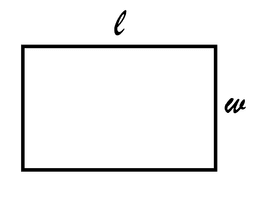
Rectangle
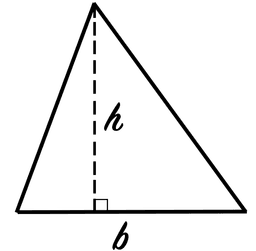
Triangle
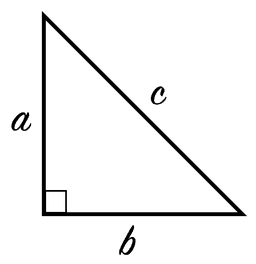
Right Triangle
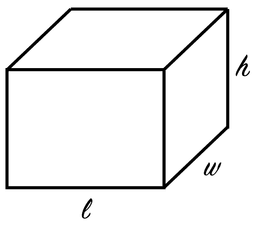
Rectangular Solid
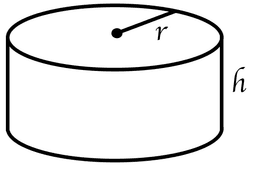
Cylinder
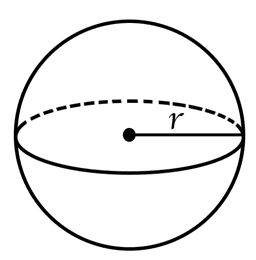
Sphere
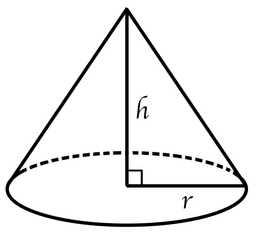
Cone
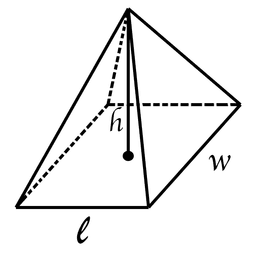
Pyramid
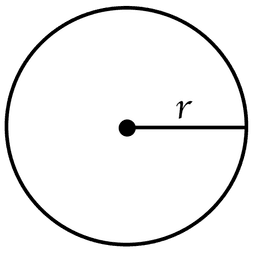
Circle
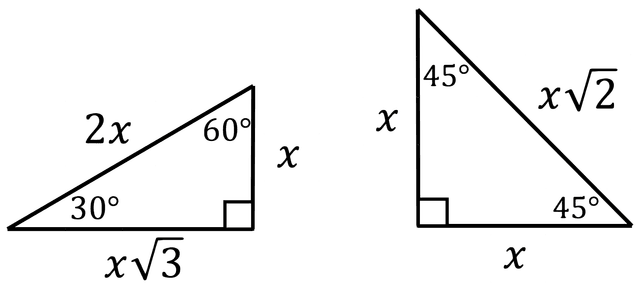
Special Right Triangles

Special Right Triangles

The number of degrees of arc in a circle is 360.
The number of radians of arc in a circle is .
The sum of the measures in degrees of the angles of a triangle is 180.

Strategy

Basic Strategy

  • Picking Numbers: replace the variables with easy values, solve the concrete version, then match that result to the choices.
    • Type 1: Variables in answer choices
    • Type 2: Geometry with no dimensions given
    • Type 3: Systems with more variables than equations
    • Type 4: Percents with no numbers given
  • Backsolving: Start with the answer choices and plug them into the problem to see which one works.
  • Measure diagrams when the figure looks drawn to scale and the problem does not say "not drawn to scale."

Desmos Skills

  • Type 1: One-variable equations, graph both sides and click intersections
  • Type 2: Systems of two equations, graph both equations and click where they cross
  • Type 3: Graph features, click maximums, minimums, intercepts, and intersections
  • Type 4: Regressions from points, build linear, quadratic, or exponential models
  • Type 5: Sliders, test unknown constants until the graph fits the condition
  • Type 6: Equivalent expressions, compare graphs and find the overlap
  • Type 7: Equivalent expressions with missing constants, use regression with lists
  • Type 8: Statistics, use lists for mean, median, standard deviation, and box plots

Desmos resources

Build the calculator habits that make these formulas faster to use

Algebra

Linear Equations

  • Slope-intercept form:
    ( = slope, = y-intercept)
  • Standard form:
  • Point-slope form:
  • Slope formula:
  • Horizontal line:
    (slope = )
  • Vertical line:
    (slope = undefined)

Properties of Linear Equations

  • Parallel lines have equal slopes:
  • Perpendicular lines have negative reciprocal slopes:
  • x-intercept:
    set and solve for
  • y-intercept:
    set and solve for

Systems of Linear Equations

  • One solution: lines intersect (different slopes)
  • No solution: lines are parallel (same slope, different y-intercepts)
  • Infinitely many solutions: lines are identical (same slope, same y-intercept)
  • Solving methods: Desmos, substitution, elimination, graphing

Linear Inequalities

  • Flip the inequality sign when multiplying or dividing by a negative number
  • Graphing:
    use a dashed line for or , solid line for or
  • Shading:
    shade above for or , below for or

Absolute Value

  • means or
  • means
  • means or

Advanced Math

Exponent Rules

  • (nth root)

Radicals

  • Rationalizing:
    multiply by to clear a radical from the denominator

Polynomials

  • Degree of a polynomial: highest exponent
  • Leading coefficient: coefficient of the highest-degree term
  • End behavior: determined by degree (even/odd) and sign of leading coefficient

Factoring Patterns

  • Difference of squares:
  • Perfect square trinomial:
  • Perfect square trinomial:
  • Monomial factoring:

Quadratic Equations

  • Standard form:
  • If , the parabola opens upward
  • If , the parabola opens downward
  • Factored form:
    , where and are the roots/zeros/x-intercepts
  • Vertex form:
    , where is the vertex
  • Quadratic formula:
  • Discriminant:
    • If : two real solutions
    • If : one real solution (repeated root)
    • If : no real solutions
  • Sum of roots:
  • Product of roots:
  • Axis of symmetry:
  • Vertex x-coordinate:

Functions

  • Function notation:
    means substitute for
  • Domain: all valid input values (x)
  • Range: all output values (y), or the set of all possible values of f(x)
  • Transformations:
    • : shift up
    • : shift down
    • : shift left
    • : shift right
    • : reflect over the -axis
    • : reflect over the -axis
    • where : vertical stretch
    • where : vertical compression

Exponential Functions and Interest

  • Growth:
    , where is the rate of growth (up , )
  • Decay:
    , where is the rate of decay (down , )
  • Doubling time:
    if , the quantity doubles every units
    • Horizontal shift:
      (right if positive, left if negative)
    • Horizontal asymptote:
    • Vertical shift:
    • Vertical stretch/compression:
    • Reflect across the -axis if
    • Horizontal stretch/compression:
    • Reflect horizontally if
    • Base behavior:
      • increasing
      • decreasing
    • Anchor point:
  • Geometric sequence:
    • = th term
    • = first term
    • = common ratio
    • = term number

Polynomial & Rational Equations

  • Remainder theorem:
    when is divided by , the remainder is
  • Factor theorem:
    is a factor of if and only if
  • Matching coefficients: if two polynomials are equal for all values of x, then their corresponding coefficients must be equal, so set each term equal to the corresponding term on the other side of the equation

Problem-Solving & Data Analysis

Ratios, Rates, and Proportions

  • Ratio:
    or
  • Proportion:
    ; cross multiply to get

Percentages

  • Percent:
  • Percent change:
  • Percent increase:
  • Percent decrease:
  • Successive percent changes:
    multiply the factors, for example increase then decrease gives

Unit Conversion

  • Multiply by conversion factors so units cancel
  • Dimensional analysis: ensure units match on both sides

Statistics (Center and Spread)

  • Mean (average):
  • Median: middle value when sorted (or average of two middle values)
  • Mode: most frequent value
  • Range:
  • Standard deviation: measures spread around the mean (higher = more spread out)
    • Adding/subtracting a constant to all values: mean changes, standard deviation stays the same
    • Multiplying/dividing all values by a constant: both mean and standard deviation change
  • Margin of error: applies only to random samples; smaller margin = more confident estimate
    • Tells about the possible range of the actual population, not the sample.
  • Box plots:
    • first line: minimum
    • second line: first quartile (25th percentile)
    • third line: median (50th percentile)
    • fourth line: third quartile (75th percentile)
    • fifth line: maximum

Data Interpretation

  • Reading tables, bar charts, histograms, scatterplots, line graphs, dot plots, box plots
  • Frequency and relative frequency
  • Two-way tables (joint, marginal, and conditional frequencies)

Probability

  • Probability:

Scatterplots and Lines of Best Fit

  • Line of best fit (linear regression): use to estimate/predict values

Sampling and Experimental Design

  • Random sample: every member of the population has an equal chance of being selected
  • Bias: systematic error in sampling (e.g., convenience sampling)

Geometry & Trigonometry

Lines and Angles

  • Supplementary angles:
    sum to
  • Complementary angles:
    sum to
  • Vertical angles: equal (formed by intersecting lines)
  • Transversal cutting parallel lines:
    • Corresponding angles are equal
    • Alternate interior angles are equal
    • Alternate exterior angles are equal
    • Co-interior (same-side interior) angles are supplementary
  • The angles that form a straight line add up to
  • The angles that form a right angle add up to
  • The angles around a point add up to

Triangles

  • Sum of interior angles
  • Exterior angle = sum of the two non-adjacent interior angles
  • Isosceles triangle: two equal sides, two equal base angles
  • Equilateral triangle: all sides equal, all angles
  • Similar triangles: corresponding angles equal, sides proportional, areas proportional to the square of corresponding side lengths
  • (given on reference sheet)
  • Pythagorean theorem:
    (given on reference sheet)
  • Triangle congruence: SSS, SAS, ASA, AAS (not SSA)

Right Triangles and Trigonometry

  • (SOH)
  • (CAH)
  • (TOA)
  • , the complementary-angle relationship
  • If , then
  • Special right triangles (given on reference sheet):
    • --: , ,
    • --: , ,
  • ASTC (All Students Take Calculus) - determines the sign of trig functions in each quadrant
    • Quadrant I: All positive
    • Quadrant II: Sine positive
    • Quadrant III: Tangent positive
    • Quadrant IV: Cosine positive

Circles

  • (given on reference sheet)
  • Central angle, arc angle, and inscribed angle:
    arc angle = central angle, inscribed angle = × central angle
  • Equation of a circle:
    , center , radius
  • Radians and degrees:
    • radians
    • To convert degrees to radians, multiply by
    • To convert radians to degrees, multiply by

Polygons

  • Sum of interior angles of an -sided polygon:
  • Each interior angle of a regular polygon:
  • Sum of exterior angles of any convex polygon:

Coordinate Geometry

  • Distance formula:
  • Midpoint formula:

Solid Geometry

  • All volume formulas are given on the reference sheet (box, cylinder, sphere, cone, pyramid)
  • Surface area of a rectangular prism:
  • Surface area of a cylinder:
  • Surface area of a sphere:

SAT Math FAQ

Common questions about SAT Math formulas

These questions cover what the SAT gives you, what you still need to memorize, and how to study this sheet efficiently.

What formulas are given on the SAT?

The SAT gives students a built-in geometry reference sheet. It includes area formulas, volume formulas, the Pythagorean theorem, special right triangles, and a few circle and angle facts.

Do you need to memorize additional formulas for SAT Math?

Yes. You still need to memorize most of the formulas used in Algebra, Advanced Math, Problem-Solving and Data Analysis, and Geometry and Trigonometry.

Is there a formula sheet on SAT Math?

Yes. SAT Math includes a reference sheet that students can open during the test, but it is limited. It helps with core geometry formulas, not with most of the algebra and advanced math formulas you need to know. That's why you should memorize this formula page.

What math is on the SAT?

SAT Math covers four major domains: Algebra, Advanced Math, Problem-Solving and Data Analysis, and Geometry and Trigonometry.

Do I really need formulas if I learn Desmos?

Yes. The built-in Desmos graphing calculator is a game-changer, but it does not fully replace full knowledge of the SAT math content.

What is the fastest way to study SAT Math formulas?

Most people will use flash cards, either digital or paper, for the formulas they don't know. Then they will practice applying those formulas on SAT practice questions, like the ones in our question bank here at Resolve Prep.

Next step

Put these formulas into practice

Knowing the formulas is step one. Applying them under timed conditions is what actually raises your score.